The Spare Room Is Not a Permanent Guest Suite
A spare room can serve daily life without losing its guest bed. Give the room a clear job, set a simple weekly routine, and make visits manageable.
A spare room does not need to stay arranged for visitors who may arrive a few times a year. A spare room routine gives the space a regular purpose, while preserving a clear way to host occasional guests. The useful question is not whether the room can accommodate company; it is what it should do on an ordinary Tuesday.
Keeping a bed made, a dresser empty, and the floor clear can feel like good hospitality. But if that arrangement leaves a room unused for months, the household is maintaining a guest experience at the expense of daily life. Naming the room’s everyday job changes the default: guests become a temporary use, not the reason the room exists.
What should the spare room do every day?
Choose a purpose that answers a real household need and suits the room’s constraints. It might be a sewing room, a quiet reading space, a place to practice an instrument, or a small office. The best choice is not the most ambitious one. It is the activity someone already wants to do, but currently has to postpone, interrupt, or set up elsewhere.
Start by noticing what the room already contains and what its fixed features allow. A shallow closet may suit fabric and craft supplies; a bright window might make reading more pleasant; a door that closes can help someone work without being drawn into household traffic. Do not choose an activity solely because a furniture catalogue makes it look tidy. The room should support the ordinary version of the activity, including the materials and interruptions that come with it.
Make the purpose specific enough to guide decisions. “A place to make things” could mean a sewing table with a machine and a drawer for current projects. “A calm room” is harder to act on until you decide whether that means a reading chair, a yoga mat, or simply a door that can be closed for a while.
How can you keep a guest bed without surrendering the room?
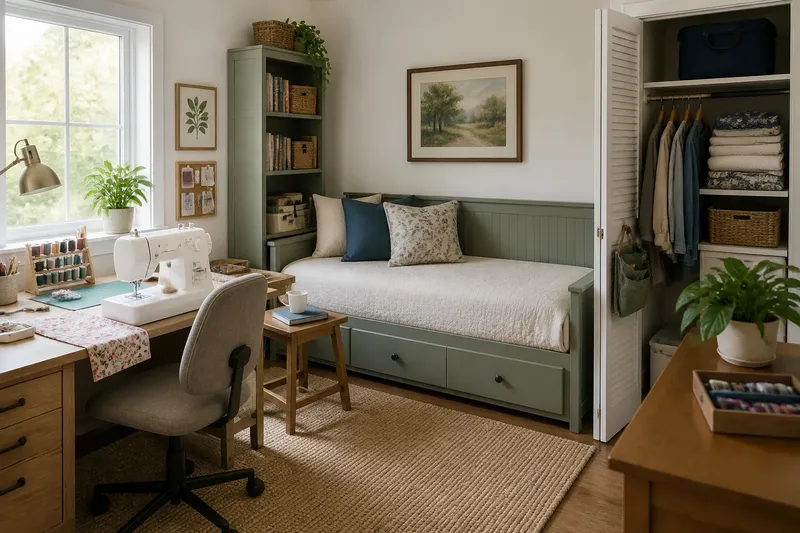
Separate the sleeping function from the idea that the whole room must remain guest-ready. A daybed can serve as a seat; a bed can sit beneath a desk-height work surface if the layout permits; a foldable mattress can be stored in a closet. These are options, not universal fixes. Choose the arrangement that leaves enough space for the room’s regular job and does not make the bed awkward to prepare.
Keep guest bedding together in one clearly chosen place, such as a labeled closet shelf or a zippered fabric bag. Store sheets, pillowcases, and a spare blanket as a set so that preparing the bed is a short household task rather than a search through several closets. Leave room for the visitor’s bag and clothing, but do not preserve an empty dresser by default if a drawer is more useful for everyday supplies.
Set a modest guest boundary. For instance, the room’s desk can stay in use, while one chair and a section of closet are cleared when visitors are expected. This makes hospitality compatible with the room’s regular purpose; it does not require the household to erase its own routine before company arrives.
What does a spare room routine look like over a week?
A routine need not turn the room into a project. Give it a short weekly reset, a small amount of everyday upkeep, and a clear response when a visit is planned. Adjust the timing to the household; the point is to avoid treating the room as either a permanent showroom or a storage area nobody wants to enter.
- On the first day: Name the room’s main job and decide what must remain available for it. Move out only items that obstruct that use, rather than attempting a full-house purge.
- During the week: Return active supplies to their assigned drawer, shelf, or container after use. Leave an in-progress project in place if the room allows it; a space that must be reset from scratch each time is less likely to be used.
- At the weekly reset: Clear the walking path, remove cups or laundry, and return loose materials to their home. Check that the guest bedding is still together, not whether the entire room looks staged.
- When a visit is planned: Confirm the sleeping arrangement, make a place for a bag, and clear the agreed guest area. Put work supplies away only if they interfere with those specific needs.
- After visitors leave: Wash and return the bedding, restore the room’s ordinary setup, and note any small change that would make the next visit simpler. Do not leave the room in guest mode until another visit appears on the calendar.
Imagine a household whose spare room has a sewing machine, but whose projects keep migrating to the dining table. They decide the room is a sewing room, move the machine onto a stable table, and keep thread and current fabric in a nearby drawer. When relatives plan a visit, they clear the chair, set out the bedding, and leave the machine in place if it does not obstruct the sleeping area. The observable result they are aiming for is straightforward: sewing can happen there on ordinary days, and a guest can still sleep there when needed.
Which choices make the room easier to share?
Favor furniture that serves the everyday purpose first and can accommodate a visit without elaborate rearrangement. A chair with a clear seat, a folding luggage rack, or a small table that can move beside a bed may be enough. Avoid buying a convertible sofa or storage system just because it promises to solve every possible use. A complicated mechanism can become one more reason the room stays closed.
Keep the room’s working materials contained but reachable. Shallow drawers, a lidded bin for a specific project, or a shelf of labeled folders can work well, depending on what the room is for. The container should make it easy to resume the activity, not conceal a growing pile whose contents have become a mystery.
Pay attention to the path through the room. A guest needs to reach the bed without stepping around a project; the person who uses the room needs access to tools without moving a stack of bedding first. If both routes are awkward, change the layout or reduce what is kept there. The room’s usefulness is usually more visible in these small movements than in how much furniture it can technically hold.
What if the room’s purpose changes?
Household needs change, so treat the room’s purpose as a current arrangement rather than a permanent identity. A nursery may later become a study; a hobby may pause; a family member may need the room for a season. A brief review every few months can help: ask whether someone used the room for its named purpose, what kept getting in the way, and what the room needs now.
If the room is rarely used for its assigned activity, do not automatically add more storage or equipment. First ask whether the chosen job is still relevant, whether the supplies are too difficult to reach, or whether another room would serve it better. Sometimes a smaller purpose is more honest: a quiet chair and lamp may be more useful than an elaborate studio that exists mainly in intention.
For a planned visit, check the bed arrangement and household items against product labels, manufacturer instructions, or local rules where they apply. For ordinary decisions about furniture and room use, the household can adapt the setup to its own needs.
How do you handle common spare room questions?
Should a spare room always have a bed?
No. Keep a permanent bed if it serves the room’s everyday purpose or suits the household’s hosting needs. Otherwise, a stored mattress or another flexible arrangement may leave more usable space without ruling out visitors.
How much space should guests get?
Give visitors a clear sleeping area, somewhere to put a bag, and reasonable access to belongings they may need. The rest of the room can remain arranged for its regular use if that does not make the stay uncomfortable.
What if the spare room becomes a storage room?
Choose which stored items genuinely belong there and give them a defined place. Move anything that blocks the room’s named purpose, then decide whether the remaining storage is useful enough to keep.
Can the room serve as an office and a guest room?
Yes, if the desk, chair, and work materials leave a workable sleeping area and a clear route through the room. If a visit requires dismantling the entire workspace, reconsider the furniture or decide which use matters more to the household.
A spare room can still welcome guests without waiting for them in a state of permanent readiness. A spare room routine keeps the daily purpose visible, makes hosting a manageable change of setup, and gives the household permission to use the space between visits. The final decision can be quite ordinary: leave the book on the nightstand, or leave the sewing project on the table, because the room belongs to the life already happening there.